
Valley Wilds Article | Wild Ways of Wildflowers
by Ranger Danny Haberman
As winter loosens its grip on Northern California, hillsides begin to shift from muted greens to bursts of violet, pink, and silver. Among the most recognizable and ecologically fascinating spring wildflowers are lupines and shooting stars — two plants that reveal just how strategic wildflowers must be to survive in California’s climate.
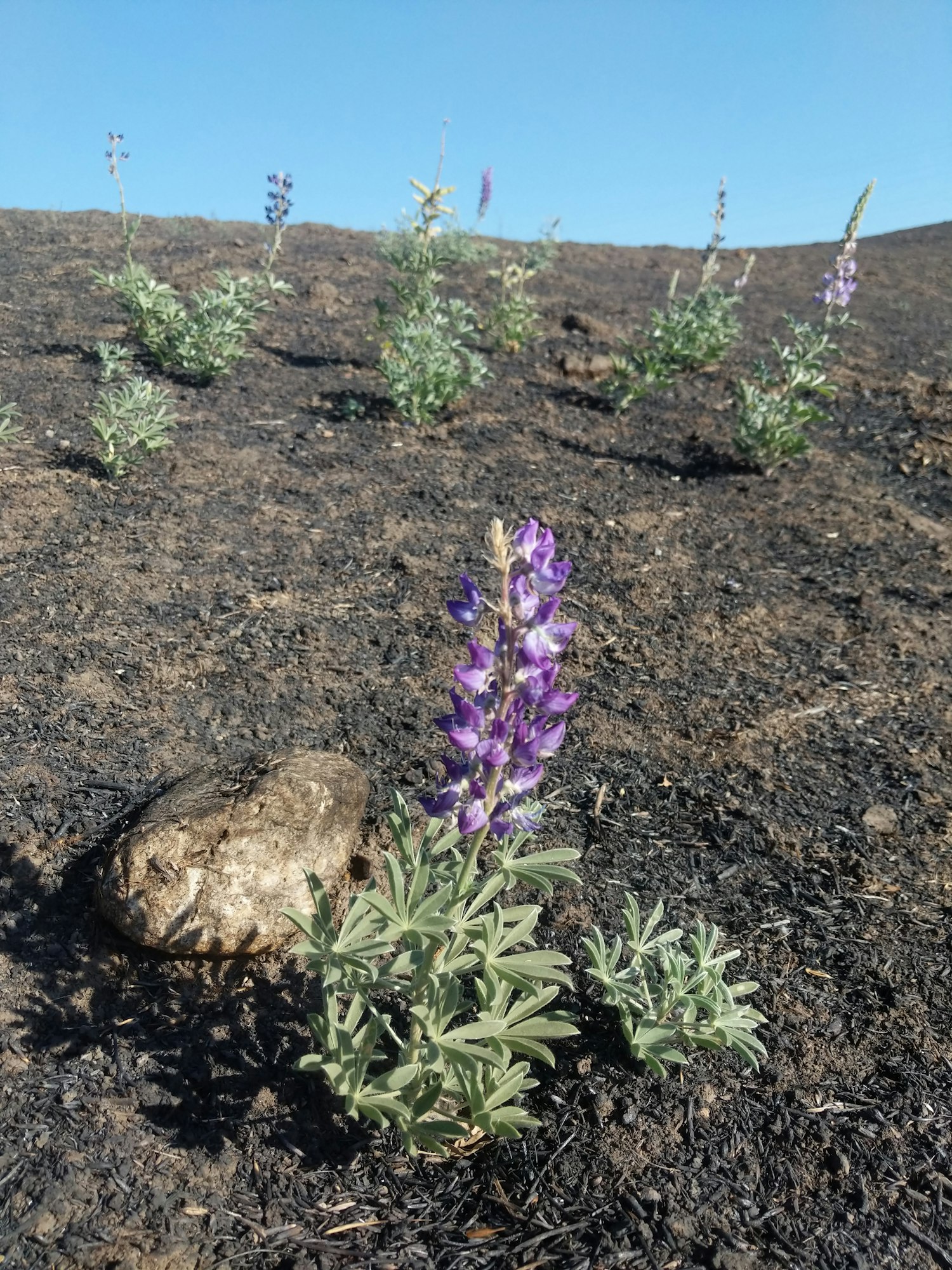
Lupines in Livermore
Walk through any of Livermore's wonderful open space parks from March through May, and you’re likely to see spikes of blue, purple, and even yellow flowers rising above palmate leaves that spread like open hands. These are lupines!
At first glance, lupines are simply beautiful. Look closer, however, and you’ll notice something subtle: their leaves often fold downward in the evening or during cool, low-light conditions. This movement, known as nyctinasty, is powered not by muscles but by changes in water pressure within specialized cells at the base of each leaflet. By shifting internal water pressure, the leaflets gently close. Why would a plant “go to sleep”? For plants living in California’s climate of wet winters followed by long, dry summers, conserving moisture is critical. Folding reduces surface area, limits water loss, and protects delicate tissues from cold night temperatures. Many species, like silver lupine, also have fine hair coating their leaves. These hairs reflect sunlight and create a thin layer of still air along the leaf surface, further reducing water loss.
Below ground, lupines perform another quiet miracle. Their roots host symbiotic bacteria that convert atmospheric nitrogen into a form the plant can use. In doing so, lupines enrich poor soils and help restore disturbed landscapes. They are not just flowers; they are ecological engineers.
Sycamore Grove Park is home to many different species of lupine, from Miniature lupine to Chick lupine to Arroyo lupine. You can find some lupines throughout Sycamore Grove Park, particularly right along the sides of the trails and along the Creek Trail.

Shooting Stars
Blooming slightly earlier in the season, typically February through April in much of Northern California, the shooting star is one of spring’s most distinctive wildflowers.
Its nodding blossoms feature petals swept dramatically backward, exposing a tight cluster of bright yellow anthers at the center. The shape is striking, but it serves a precise function.
Unlike many flowers, shooting stars do not freely release their pollen. Their anthers are poricidal, meaning pollen escapes only through tiny openings. To access it, a visiting bee must grasp the flower and vibrate its flight muscles rapidly in a behavior known as buzz pollination or sonication. The vibration shakes pollen loose in a fine burst, dusting the bee’s body.
This system acts almost like a password. Only certain native bees, particularly bumblebees capable of producing the right vibration frequency, can effectively pollinate the plant. By restricting access, shooting stars reduce wasted pollen and increase the likelihood that it reaches another flower of the same species.
Shooting stars are also seasonal strategists. They bloom early, before the grass grows tall and many competing flowers appear. After setting seed, the plant retreats underground, surviving the dry summer as a dormant rootstock until the following winter rains return. You can find this special flower up on the Patterson Ranch Trail right after the Overlook.
Explore the wild ways of wildflowers at Sycamore Grove on a ranger-led hike! See the ranger calendar to register: Ranger Programs and Events - Livermore Area Recreation and Park District
Valley Wilds Newsletter Article April2026